Category: essay

  • On Using Stoicism as a Daily Operating System

    On Using Stoicism as a Daily Operating System

    A Spartan Answer

    There is so much that feels like it must be done. If you run a company, love people well, and try to live with some moral seriousness, the list never ends. And at some point the question stops being how do I get through the list and becomes something harder: how do I carry all of this without losing my mind — or myself?

    I’ve been drawn to Stoicism for a while. The Spartan quality is part of what attracts me — the directness, the refusal to soften things unnecessarily. But I’ve come to think the real promise of Stoicism isn’t hardness. It’s spine. Not armor that keeps the world out, but a structure that lets you stay open because you know where you stand.

    This essay is my attempt to think that through by trying to use it — across the domains where I actually live: as a founder, as a loved one, and as a man trying to be fully himself in public.


    The Foundations, Briefly

    Stoicism rests on a few ideas that are simple to state and difficult to live.

    The dichotomy of control. Some things are up to you — your judgments, your choices, your effort. Everything else is not. The weather, other people’s opinions, whether the fundraise closes, whether she texts back. The Stoics don’t say those things don’t matter. They say your peace cannot depend on them. This is not indifference. It’s a radical reordering of where you place your weight.

    Virtue as the only real good. Not outcomes. Not reputation. Not comfort. The Stoics argue that the only thing that can be genuinely good or bad is the quality of your character — your courage, your honesty, your fairness, your self-discipline. Everything else is “preferred” or “dispreferred,” but never worth trading your integrity for. This sounds abstract until you’re in a meeting where telling the truth might cost you something.

    Prohairesis — the choosing self. This is the concept I find most powerful. Epictetus, who was born a slave, taught that there is a part of you no external circumstance can touch: your capacity to choose how you respond. Viktor Frankl said something similar two thousand years later. It’s not that bad things don’t happen. It’s that between what happens and what you do, there is a space — and that space is yours.

    Amor fati — love of fate. Not tolerance. Not acceptance. Love. The Stoics invite you to want your life as it actually is, including the parts that hurt. Not because suffering is good, but because resistance to reality is a war you always lose.


    What This Looks Like When I Actually Try It

    Theory is easy. The interesting question is what changes on a Wednesday afternoon.

    As a Founder

    I direct a company that is trying to do something meaningful in the world. The pressure is constant — delivery, fundraising, team dynamics, the weight of responsibility for other people’s livelihoods and belief.

    The dichotomy of control, applied honestly, would change a lot. I can prepare the best pitch I’m capable of. I cannot control whether the investor says yes. I can give direct, honest feedback to a co-founder. I cannot control how they receive it. I can set the direction. I cannot guarantee the outcome.

    This is not passivity — it’s the opposite. It frees enormous energy that currently goes to anxiety about things I cannot influence. And it demands more of me where I do have influence: my preparation, my clarity, my integrity in hard conversations.

    Virtue as the sole good also reframes what “success” means on any given day. Did I make good decisions while well-rested? Did I tell the truth when it was uncomfortable? Did I lead with fairness? If yes, it was a good day — regardless of what the metrics say. As Marcus Aurelius wrote to himself: “Waste no more time arguing about what a good man should be. Be one.”

    As a Loved One

    I value connection deeply. I don’t want to become someone who handles life well but holds people at a distance.

    But here’s what’s actually hard: my life path feels genuinely different from most people around me. The things that occupy my inner life — building a company with moral ambition, thinking about how the world could work differently — don’t translate easily into casual conversation. I’m not better. I’m just somewhere else. And that somewhere else can be lonely, because the gap between what I care about most and what I can share easily creates a kind of quiet distance, even with people I love.

    The Stoic temptation here would be to retreat into self-sufficiency. The Stoics revered the sage who needs nothing from anyone. But I don’t think that’s the right reading. Even Marcus Aurelius — emperor, philosopher, the most powerful man in the world — wrote in the very first book of his Meditations about the people who shaped him: his grandfather’s calm, his mother’s generosity, his teachers’ honesty. The Stoic life is not the isolated life.

    So what does Stoicism actually offer here? I think it’s this: the freedom to love people fully without needing them to be on the same path. I can be close to someone and accept that they live a completely different life, with different ambitions and different definitions of a good day. What’s up to me is how I show up — with presence, with honesty, with care. What’s not up to me is whether they understand the particular intensity of what I’m building, or whether our conversations always reach the depth I crave.

    The deeper Stoic move is even harder: to see that the distance I sometimes feel might not be about other people at all. It might be about my own unwillingness to simply be with someone without agenda, without needing the conversation to go somewhere important. Sometimes connection happens in the ordinary, and the Stoic discipline is to be fully present for that too.

    As a Single Man Trying to Be Himself

    Here’s where it gets personal in a way that might sound small but isn’t. I like being strange. I like being fully myself — my intensity, my seriousness, my odd enthusiasms. And that is frightening, because being visibly yourself in public invites judgment.

    The Stoic framework is almost embarrassingly direct here: other people’s opinions are not up to you. They are, in the technical Stoic sense, nothing to you. Not worthless — just not yours to manage. What is yours is whether you showed up honestly. Whether you said what you meant. Whether you were kind without performing.

    There’s a concept adjacent to Stoicism — parrhesia, frank speech — that the ancient Greeks valued deeply. It means speaking your truth plainly, even when it’s socially risky. Not as aggression, but as respect: for yourself, for the other person, for reality.

    So the Stoic single man doesn’t perform confidence. He just says what he thinks. Wears what he wears. Lets the weirdness be visible. And when that means some people aren’t drawn to him — that’s information, not failure. The point isn’t to not care. The point is to have placed your sense of self somewhere no rejection can reach: in the quality of your attention, your honesty, your willingness to be present. The right people will recognise it. And if they don’t come today, the Stoic practice is to trust that you’ve lost nothing essential — because what’s essential was never at stake.


    Where I Go from Here

    I’m writing this essay because I learn from writing and because I think it’s a good habit to share openly. We’re all human in the end — silly and wonderful — and I think there’s something to be gained from showing the work.

    A Daily Practice

    The Stoics were serious about daily reflection. Seneca described examining his day each evening as “pleading his case at his own court.” Epictetus recommended the Pythagorean three-question review before sleep. Marcus Aurelius wrote his Meditations as part of this same practice — a private journal never meant for publication, yet somehow the most widely read philosophical text in history.

    I’m building a version of this for myself. In the morning, before work:

    What is within my control today? Where will I be tempted to spend energy on what isn’t? What kind of person do I want to be in today’s difficult moments?

    And in the evening, briefly, in writing:

    Where did I act in line with who I want to be? Where did I flinch, react, or lose my centre? What did I waste energy on that was never mine to control? What would I do differently — not as self-punishment, but as preparation?

    For the door — a few reminders I want to see daily:

    Is this within my control? You could leave life right now. Let that determine what you do and say and think. — Marcus Aurelius Be a good human before a productive one.

    What I’m Reading

    Marcus Aurelius’ Meditations is the obvious starting point, and it earns its reputation — it reads like the private notebook of someone trying hard to be good under impossible pressure. Epictetus’ Discourses are sharper and more demanding. Seneca’s Letters to Lucilius are warmer and more literary — the easiest entry point if you want to start somewhere gentle. For a modern guide, William Irvine’s A Guide to the Good Life is practical without being shallow.

    What I’m Guarding Against

    The risk for someone like me is turning Stoicism into another optimisation project. Another system. Another thing to get right. I know this about myself — the instinct to systemise, to measure, to perfect. Stoicism should simplify, not complicate. It should subtract, not add.

    So here are the guardrails I’m setting: no tracking, no scoring, no streaks. If I miss a morning reflection, that’s fine — the Stoic response to missing a Stoic practice is itself Stoic. No guilt, just return. If it starts feeling like homework, something has gone wrong and I need to step back and remember why I started: not to become more disciplined, but to become more free.

    Marcus put it well: “Ask yourself at every moment, is this necessary?”

    That applies to the practice itself.


    If I imagine what this looks like a year from now — having lived with these ideas, not just read about them — I think the change wouldn’t be dramatic from the outside. I’d still run the same company, love the same people, walk through the same city. But something would be different underneath. Less flinching at hard conversations. Less energy leaked into things I can’t control. More willingness to be visibly, unapologetically myself — not out of confidence exactly, but out of having placed my centre somewhere steady. More presence with people I love, even when our paths diverge. A lighter grip on outcomes. A firmer grip on character.

    Life will remain messy and hard. But I’d rather meet it with spine than with armor.

  • A Framework for Life – 21st Century Edition

    A Framework for Life – 21st Century Edition

    Tis wat… Leven.

    Elke keer denk ik het weer uitgevogeld te hebben – en dan vervliegd het weer.

    Laat ik het eens opschrijven. Here it goes:

    Book 1: Prescriptive

    1.1 The directive summary

    My purpose

    To bring more Light and Love to Earth.

    My vision

    A world where humanity is sustainably enlightened, living in a thriving homeostasis with all Life on Earth.

    My mission

    Live a present, loving, cooperative, and wise life – with enjoyment 🙂

    1.2 The foundational beliefs

    Beliefs

    • There exists karma. Every action leads to result.
    • Therefore, nobody really dies. Bodies disintegrates after some time, but karma keeps going until the end.

    Principles

    • Never say never.
    • Life is unsatisfactory.
    • Do each day one thing that scares you.
    • Do not choose in fear, choose in faith.
    • Enjoy and trust the process, do not focus too much on the result.
    • Do what makes you happy after you’ve done it.
    • Leave it better then you found it.
    • Smile 🙂.
    • Life is a party, but you have to put up the decoration yourself.
    • Restrain from having expectations. This makes everything is a gift.

    Book 2: Descriptive

    2.1 Reality

    2.2 The experience of being a human

  • Computational Democracy

    Computational Democracy

    A Brief Introduction: When Democracy Meets the Wisdom of Nature

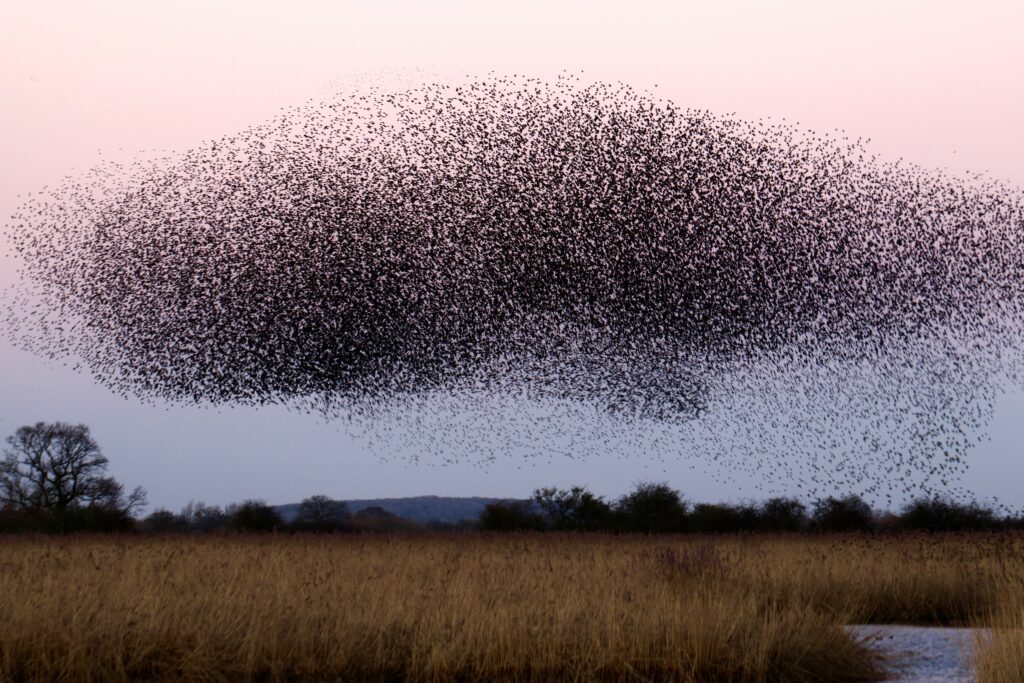
    Ever wonder why a flock of starlings can perform aerial ballet with thousands of participants, while getting ten friends to agree on a restaurant feels impossible? Or why your smartphone can coordinate with cell towers across continents flawlessly, but our political systems seem to break down whenever we face complex challenges?

    The secret isn’t that birds are smarter than humans (though some days, that’s debatable). It’s that natural systems have spent billions of years figuring out how to make collective decisions without descending into chaos. They’ve discovered principles that we’re only just beginning to understand—and that we desperately need to apply to human society.

    This essay explores a simple but radical idea: what if we designed our democratic institutions to work more like the natural systems that actually succeed at coordination? What if we could create “computational democracy”—not rule by computers, but democracy enhanced by the same principles that make forests, brains, and immune systems so remarkably good at collective problem-solving?

    If you’ve ever felt frustrated that our brightest minds can’t seem to coordinate solutions to obvious problems, or wondered why our institutions feel so clunky compared to the elegant systems we see in nature, this exploration is for you. We’ll journey from the physics of life itself to practical possibilities for transforming how we make decisions together, taking you along our dream of Computational Democracy.

    The Promise of Natural Coordination

    Learning from Billions of Years of R&D

    Think about the most frustrating meeting you’ve ever attended. Now imagine if that same group of people could coordinate as smoothly as the cells in your body coordinate to heal a wound, or as elegantly as a forest coordinates resource sharing between trees. The difference isn’t intelligence—it’s that natural systems have had billions of years to debug their coordination mechanisms.

    Consider what your immune system accomplishes every day: millions of different cell types communicate, share information, make collective decisions about threats, allocate resources, and maintain the delicate balance that keeps you alive. They do this without a CEO, without voting, without getting stuck in endless committee meetings. They’ve mastered what we’re still struggling with—how to make good collective decisions quickly.

    The key insight that’s emerging from complexity science research is that these natural systems succeed because they’ve evolved sophisticated ways to process information and maintain boundaries. Each system knows how to stay organized internally while remaining responsive to changes in its environment.

    Why Human Coordination Keeps Breaking Down

    Here’s the frustrating reality: the coordination problems that keep us up at night—climate change, inequality, political dysfunction—all follow the same basic pattern. Everyone has reasonable individual incentives, but when we all follow those incentives, we create collective disasters.

    It’s like being stuck in traffic. You’re not moving, so you switch lanes, which makes sense for you individually. But when everyone does this, traffic gets worse for everyone. Scale this dynamic up to global challenges, and you get our current predicament.

    Our current institutions—governments, markets, democracies—were designed for simpler times when communities were smaller and problems were more local. They’re like using a paper map to navigate a modern city. They sort of work, but they’re painfully inadequate for the complexity we’re actually facing.

    Meanwhile, the natural systems around us handle far more complex coordination challenges every day. A forest coordinates resource sharing between thousands of species. Your brain coordinates activity between billions of neurons. These systems don’t just avoid disasters—they actively create resilience and intelligence through their coordination.

    What We Could Build Instead

    Now here’s where it gets exciting. What if we could design democratic institutions that actually worked like these successful natural systems? What if collective decision-making could be as smooth as the coordination you see in a murmuration of starlings?

    This isn’t about replacing human judgment with computers. It’s about giving human collective intelligence the same kind of tools that make natural systems so effective. Just as GPS doesn’t replace your ability to navigate but makes it vastly more powerful, computational democracy could amplify our ability to think and decide together.

    Picture this: instead of the current system where we argue past each other on social media and vote once every few years, we could have ongoing conversations where good ideas get refined and bad ideas get filtered out naturally. Instead of policies made by whoever shouts loudest, we could have decisions that genuinely integrate diverse perspectives and adapt based on real-world feedback.

    The benefits would be tangible and immediate: faster responses to emerging challenges, policies that actually work because they’ve been tested and refined, institutions that get smarter over time instead of more dysfunctional. We could finally have democracy that feels as sophisticated as the technology in our pockets.

    Building the Information Infrastructure for Collective Intelligence

    How Nature Creates Intelligence Through Connection

    Every successful coordination system in nature operates on the same basic principle: constant, meaningful communication between parts creates intelligence that exceeds what any individual part could achieve alone.

    Your brain is the perfect example. Individual neurons are simple—they can only send basic electrical signals. But when billions of neurons communicate continuously, consciousness emerges. No single neuron understands language or recognizes faces, yet their collective conversation creates your ability to read these words and understand their meaning.

    Forests work similarly through underground networks of fungal threads that connect tree roots. Trees share carbon, water, and even warning signals about insect attacks through these networks. What looks like individual trees competing is actually a collaborative network that makes the entire forest more resilient. When one tree is shaded and struggling, others can send it resources. When drought hits, the network helps distribute scarce water.

    The immune system provides another model: millions of different cell types patrol your body, constantly sharing chemical messages about what they encounter. When they detect a threat, this distributed communication network rapidly coordinates a response. No central authority tells each cell what to do, yet they achieve remarkably sophisticated collective behavior.

    The pattern is clear: intelligence emerges from connection, and connection requires continuous information flow.

    The Power of Human Conversation

    At the individual level, genuine conversation transforms both participants. When we truly listen to someone with a different perspective, we literally expand our capacity to understand the world. This isn’t just feel-good philosophy—cognitive science research shows that thinking extends beyond individual brains when we engage authentically with others.

    Regular dialogue with neighbors creates something social scientists call “social capital”—networks of trust and mutual understanding that make communities more resilient and capable. But it goes deeper than that. Communities that engage in ongoing conversation about shared challenges develop collective intelligence that allows them to spot problems early, generate creative solutions, and adapt quickly to changing circumstances.

    This mirrors how biological systems maintain health. Just as cells must constantly communicate to coordinate immune responses, communities need ongoing dialogue to coordinate responses to social challenges. One-off town halls or annual elections aren’t enough—we need the social equivalent of a nervous system.

    When this works well, you can see it. Think of a neighborhood that successfully organizes to address a local problem, or a community that rallies together during a crisis. These groups didn’t just happen to be more organized—they had developed the conversational infrastructure that allowed collective intelligence to emerge when needed.

    Scaling Wisdom: From Dialogue to Democracy

    Here’s where computational tools become essential. The principles that work for small groups—continuous dialogue, information sharing, collective sense-making—can’t scale to complex societies through human conversation alone. We need technology to amplify human wisdom without replacing human judgment.

    Imagine democratic processes that work more like healthy biological systems: continuous rather than episodic, adaptive rather than rigid, learning rather than repeating. Citizens could engage in ongoing dialogue about shared challenges, with AI systems helping to synthesize diverse perspectives, surface emerging patterns, and coordinate collective responses.

    These systems could embody the same error-correction mechanisms that make natural systems robust. Misinformation would be filtered out through distributed fact-checking, while good ideas would spread and improve through collaborative refinement. The result would be institutions capable of genuine learning—able to update their approaches based on evidence rather than ideology.

    This isn’t science fiction. Projects around the world are already demonstrating how computational tools can enhance rather than replace human collective intelligence. Digital platforms are helping communities engage in more sophisticated dialogue, AI systems are helping synthesize large-scale input into policy recommendations, and new forms of online democracy are allowing broader participation in complex decisions.

    The path forward requires combining the best of human wisdom—our creativity, empathy, and moral reasoning—with the best of computational power—the ability to process vast amounts of information, identify patterns, and coordinate complex systems. This is how we build democracy that’s finally as sophisticated as the challenges we face.


    People Know How.

    On a mission to contribute in conceiving this missing infrastructure.

    Pages: 1 2