A Spartan Answer
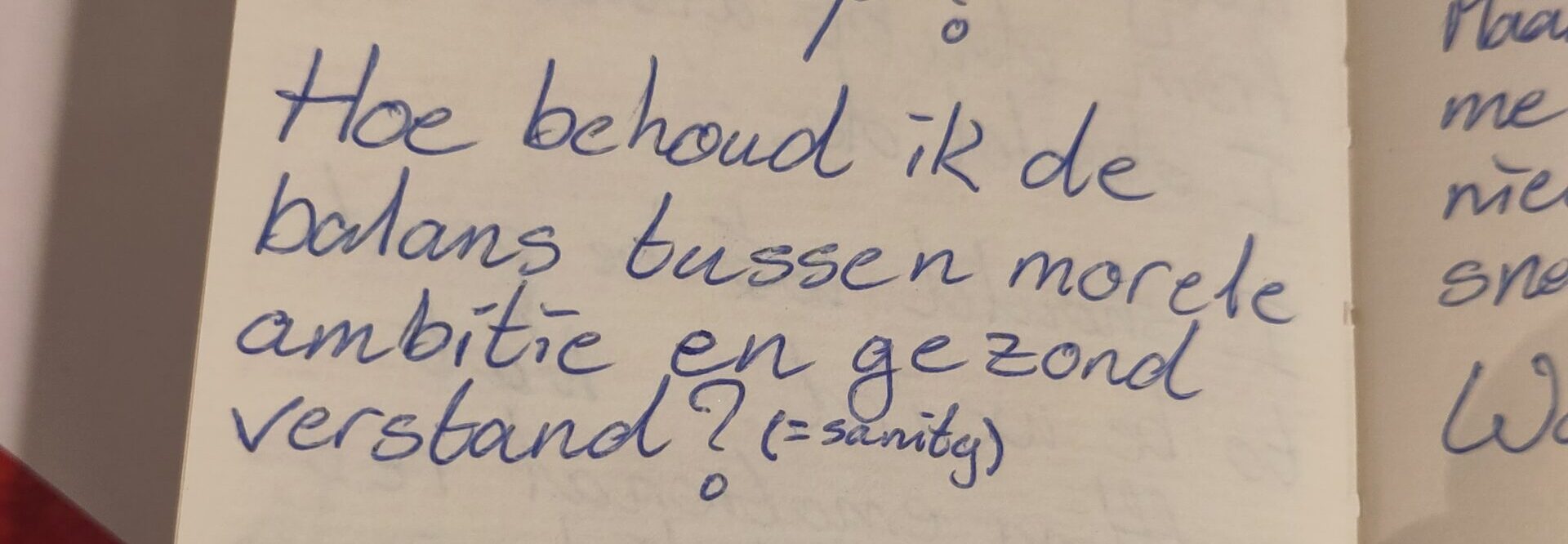
There is so much that feels like it must be done. If you run a company, love people well, and try to live with some moral seriousness, the list never ends. And at some point the question stops being how do I get through the list and becomes something harder: how do I carry all of this without losing my mind — or myself?
I’ve been drawn to Stoicism for a while. The Spartan quality is part of what attracts me — the directness, the refusal to soften things unnecessarily. But I’ve come to think the real promise of Stoicism isn’t hardness. It’s spine. Not armor that keeps the world out, but a structure that lets you stay open because you know where you stand.
This essay is my attempt to think that through by trying to use it — across the domains where I actually live: as a founder, as a loved one, and as a man trying to be fully himself in public.
The Foundations, Briefly
Stoicism rests on a few ideas that are simple to state and difficult to live.
The dichotomy of control. Some things are up to you — your judgments, your choices, your effort. Everything else is not. The weather, other people’s opinions, whether the fundraise closes, whether she texts back. The Stoics don’t say those things don’t matter. They say your peace cannot depend on them. This is not indifference. It’s a radical reordering of where you place your weight.
Virtue as the only real good. Not outcomes. Not reputation. Not comfort. The Stoics argue that the only thing that can be genuinely good or bad is the quality of your character — your courage, your honesty, your fairness, your self-discipline. Everything else is “preferred” or “dispreferred,” but never worth trading your integrity for. This sounds abstract until you’re in a meeting where telling the truth might cost you something.
Prohairesis — the choosing self. This is the concept I find most powerful. Epictetus, who was born a slave, taught that there is a part of you no external circumstance can touch: your capacity to choose how you respond. Viktor Frankl said something similar two thousand years later. It’s not that bad things don’t happen. It’s that between what happens and what you do, there is a space — and that space is yours.
Amor fati — love of fate. Not tolerance. Not acceptance. Love. The Stoics invite you to want your life as it actually is, including the parts that hurt. Not because suffering is good, but because resistance to reality is a war you always lose.
What This Looks Like When I Actually Try It
Theory is easy. The interesting question is what changes on a Wednesday afternoon.
As a Founder
I direct a company that is trying to do something meaningful in the world. The pressure is constant — delivery, fundraising, team dynamics, the weight of responsibility for other people’s livelihoods and belief.
The dichotomy of control, applied honestly, would change a lot. I can prepare the best pitch I’m capable of. I cannot control whether the investor says yes. I can give direct, honest feedback to a co-founder. I cannot control how they receive it. I can set the direction. I cannot guarantee the outcome.
This is not passivity — it’s the opposite. It frees enormous energy that currently goes to anxiety about things I cannot influence. And it demands more of me where I do have influence: my preparation, my clarity, my integrity in hard conversations.
Virtue as the sole good also reframes what “success” means on any given day. Did I make good decisions while well-rested? Did I tell the truth when it was uncomfortable? Did I lead with fairness? If yes, it was a good day — regardless of what the metrics say. As Marcus Aurelius wrote to himself: “Waste no more time arguing about what a good man should be. Be one.”
As a Loved One
I value connection deeply. I don’t want to become someone who handles life well but holds people at a distance.
But here’s what’s actually hard: my life path feels genuinely different from most people around me. The things that occupy my inner life — building a company with moral ambition, thinking about how the world could work differently — don’t translate easily into casual conversation. I’m not better. I’m just somewhere else. And that somewhere else can be lonely, because the gap between what I care about most and what I can share easily creates a kind of quiet distance, even with people I love.
The Stoic temptation here would be to retreat into self-sufficiency. The Stoics revered the sage who needs nothing from anyone. But I don’t think that’s the right reading. Even Marcus Aurelius — emperor, philosopher, the most powerful man in the world — wrote in the very first book of his Meditations about the people who shaped him: his grandfather’s calm, his mother’s generosity, his teachers’ honesty. The Stoic life is not the isolated life.
So what does Stoicism actually offer here? I think it’s this: the freedom to love people fully without needing them to be on the same path. I can be close to someone and accept that they live a completely different life, with different ambitions and different definitions of a good day. What’s up to me is how I show up — with presence, with honesty, with care. What’s not up to me is whether they understand the particular intensity of what I’m building, or whether our conversations always reach the depth I crave.
The deeper Stoic move is even harder: to see that the distance I sometimes feel might not be about other people at all. It might be about my own unwillingness to simply be with someone without agenda, without needing the conversation to go somewhere important. Sometimes connection happens in the ordinary, and the Stoic discipline is to be fully present for that too.
As a Single Man Trying to Be Himself
Here’s where it gets personal in a way that might sound small but isn’t. I like being strange. I like being fully myself — my intensity, my seriousness, my odd enthusiasms. And that is frightening, because being visibly yourself in public invites judgment.
The Stoic framework is almost embarrassingly direct here: other people’s opinions are not up to you. They are, in the technical Stoic sense, nothing to you. Not worthless — just not yours to manage. What is yours is whether you showed up honestly. Whether you said what you meant. Whether you were kind without performing.
There’s a concept adjacent to Stoicism — parrhesia, frank speech — that the ancient Greeks valued deeply. It means speaking your truth plainly, even when it’s socially risky. Not as aggression, but as respect: for yourself, for the other person, for reality.
So the Stoic single man doesn’t perform confidence. He just says what he thinks. Wears what he wears. Lets the weirdness be visible. And when that means some people aren’t drawn to him — that’s information, not failure. The point isn’t to not care. The point is to have placed your sense of self somewhere no rejection can reach: in the quality of your attention, your honesty, your willingness to be present. The right people will recognise it. And if they don’t come today, the Stoic practice is to trust that you’ve lost nothing essential — because what’s essential was never at stake.
Where I Go from Here
I’m writing this essay because I learn from writing and because I think it’s a good habit to share openly. We’re all human in the end — silly and wonderful — and I think there’s something to be gained from showing the work.
A Daily Practice
The Stoics were serious about daily reflection. Seneca described examining his day each evening as “pleading his case at his own court.” Epictetus recommended the Pythagorean three-question review before sleep. Marcus Aurelius wrote his Meditations as part of this same practice — a private journal never meant for publication, yet somehow the most widely read philosophical text in history.
I’m building a version of this for myself. In the morning, before work:
What is within my control today? Where will I be tempted to spend energy on what isn’t? What kind of person do I want to be in today’s difficult moments?
And in the evening, briefly, in writing:
Where did I act in line with who I want to be? Where did I flinch, react, or lose my centre? What did I waste energy on that was never mine to control? What would I do differently — not as self-punishment, but as preparation?
For the door — a few reminders I want to see daily:
Is this within my control? You could leave life right now. Let that determine what you do and say and think. — Marcus Aurelius Be a good human before a productive one.
What I’m Reading
Marcus Aurelius’ Meditations is the obvious starting point, and it earns its reputation — it reads like the private notebook of someone trying hard to be good under impossible pressure. Epictetus’ Discourses are sharper and more demanding. Seneca’s Letters to Lucilius are warmer and more literary — the easiest entry point if you want to start somewhere gentle. For a modern guide, William Irvine’s A Guide to the Good Life is practical without being shallow.
What I’m Guarding Against
The risk for someone like me is turning Stoicism into another optimisation project. Another system. Another thing to get right. I know this about myself — the instinct to systemise, to measure, to perfect. Stoicism should simplify, not complicate. It should subtract, not add.
So here are the guardrails I’m setting: no tracking, no scoring, no streaks. If I miss a morning reflection, that’s fine — the Stoic response to missing a Stoic practice is itself Stoic. No guilt, just return. If it starts feeling like homework, something has gone wrong and I need to step back and remember why I started: not to become more disciplined, but to become more free.
Marcus put it well: “Ask yourself at every moment, is this necessary?”
That applies to the practice itself.
If I imagine what this looks like a year from now — having lived with these ideas, not just read about them — I think the change wouldn’t be dramatic from the outside. I’d still run the same company, love the same people, walk through the same city. But something would be different underneath. Less flinching at hard conversations. Less energy leaked into things I can’t control. More willingness to be visibly, unapologetically myself — not out of confidence exactly, but out of having placed my centre somewhere steady. More presence with people I love, even when our paths diverge. A lighter grip on outcomes. A firmer grip on character.
Life will remain messy and hard. But I’d rather meet it with spine than with armor.
